
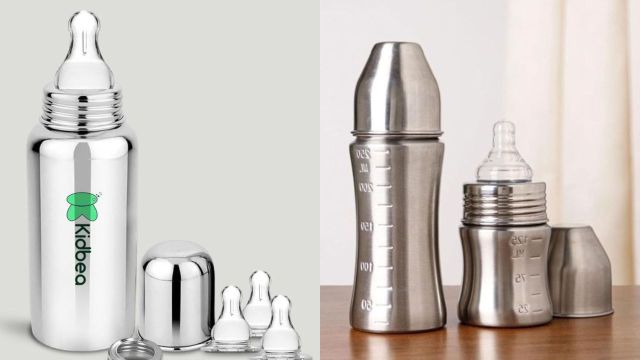
Best feeding bottles parents reach for to check out: Those early feeds can feel like a blur—sleepy cues, tiny sips, and figuring out what actually makes your baby comfortable. A dependable bottle doesn’t “solve” everything, but it can make everyday feeding calmer, cleaner, and more predictable.

Feeding bottles parents reach for again and again
These picks are curated from Myntra around real parent priorities: easy latch, less fuss during and after feeds, and designs that don’t make cleaning feel like a second job. Expect a mix of shapes and materials that suit different routines—newborn days, combo-feeding, and on-the-go schedules.
Feeding bottles look similar at first glance, but the day-to-day experience comes down to two things: material and cleaning. Health guidance is consistent on the basics—take bottles apart, rinse, wash thoroughly (by hand or dishwasher if safe), and let parts air-dry completely. Sanitizing is an extra step some families use, especially early on, but good cleaning after each use is the non-negotiable. Material then shapes the rest: stainless steel is durable and naturally BPA-free, while plastic bottles are lighter and often cheaper, but they can scratch over time, which can make hygiene feel harder to manage.
A second, quieter factor is flow. “Regular” versus “medium” flow doesn’t mean one is better; it just changes how fast milk moves, which affects how often the baby pauses and how much air is swallowed. Anti-colic valves try to reduce air intake, but they only work as well as the bottle’s assembly and cleaning allow.
The five bottles, in detail
LITTLE GINNIE Stainless Steel Feeding Bottle
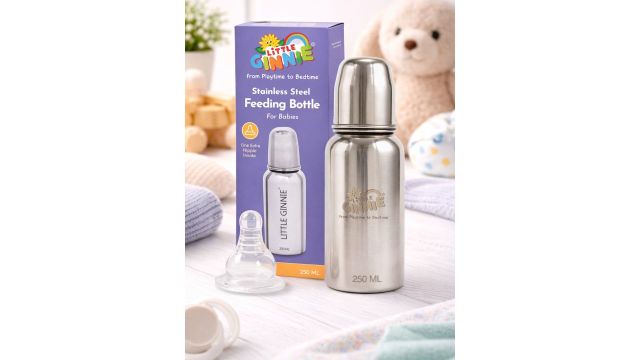
A 250 ml stainless-steel bottle with a silicone nipple, anti-colic valve, and dishwasher-safe claim, with a travel cap and ergonomic design. It’s positioned as plastic-free and leak-proof, which is typically what parents want for going out.
Pros
- Stainless steel is durable and non-porous, which helps with odour retention and long-term hygiene.
- Dishwasher-safe parts can make daily cleaning more realistic, especially with hot water and heated drying cycles.
Cons
- Valves and extra parts mean more disassembly and more attention during cleaning.
- Some babies need time to adjust to new nipple shapes, even when they’re designed for “natural latching.”
Pro-tip
- Fully take apart the valve and nipple after each use; trapped milk residue is the main reason “anti-colic” setups start smelling off.
Voik Vega Infants Grey Stainless Steel Anti-Colic Feeding Bottle – 250ml
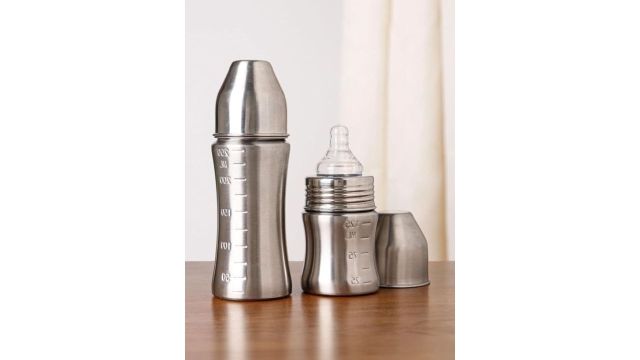
A 250 ml stainless-steel bottle with silicone and stainless steel construction, anti-colic features, and a medium flow. It’s also positioned as plastic-free, rust-free, and odour-free.
Pros
- Stainless steel is widely favoured for durability and long-term reuse, especially for families trying to reduce plastic.
- Hand-washing with warm water and proper brushing can be very effective when done right.
Cons
- Hand washing takes consistency: brushes, drying racks, and routine matter more than the bottle itself.
- Medium flow may be too fast for some babies early on and may need monitoring for comfort.
Pro-tip
- Use a bottle brush reserved for feeding items only, and air-dry parts completely before reassembly.
Also Read: From Morning Plans to Evening Invites: Chikankari Kurta Sets That Adapt
Adore Kids Set Of 3 England Narrow Neck Feeding Bottles – 250 ml Each
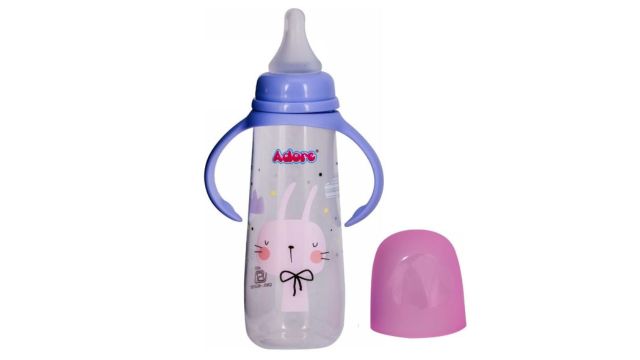
A set of three 250 ml polypropylene bottles, BPA-free, BIS compliant, and described as freezer safe and sterilizer friendly. It’s the “multiple bottles ready” option, useful for daycare or families who prefer batching.
Pros
- Multipacks reduce daily pressure because there’s always a clean bottle available.
- Plastic bottles are lightweight and easy to pack.
Cons
- Plastic can scratch over time, and scratches can be harder to clean thoroughly; replacing worn bottles becomes part of the routine.
- Narrow-neck bottles can be slightly harder to scrub compared with wide-neck designs, depending on the brush.
Pro-tip
- Inspect nipples and bottle interiors regularly; replace parts that look cloudy, cracked, or scratched.
Tutots Infants Kids Printed BPA-Free Anti-Colic Feeding Bottles 250ml
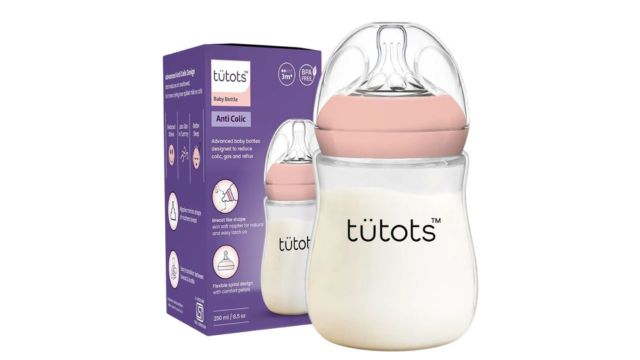
A 250 ml PP plastic bottle, BPA-free, printed, with anti-colic positioning and medium flow. It’s described as helping reduce gas and simplify burping, with basic wipe-care instructions.
Pros
- Anti-colic designs can help some babies by reducing air intake when assembled and used correctly.
- Lightweight and easy for travel.
Cons
- “Wipe with a cloth” is not enough after actual feeding; bottle parts still need proper washing to remove milk residue.
- Printed exteriors can show wear if scrubbed aggressively.
Pro-tip
- Treat it like any feeding bottle: disassemble, rinse, wash with soap and warm water, and air-dry—don’t rely on wiping.
Kidbea Infants Stainless Steel PBA Proof Feeding Bottles
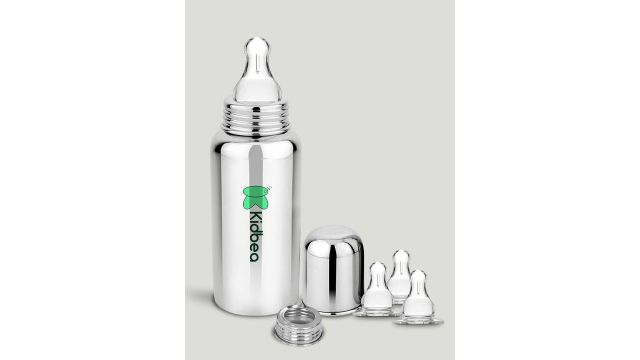
A stainless-steel feeding bottle with a hygienic cover and leak-proof claims, positioned as safe and non-toxic. It’s the simplest stainless option here: fewer stated parts, fewer stated features, more basic daily use.
Pros
- Stainless steel bottles are generally durable and resistant to bacterial buildup because the surface is non-porous.
- A hygienic cover is useful for bags and travel days.
Cons
- If it doesn’t include a clear anti-colic valve system, the feeding experience depends more heavily on nipple choice and baby’s latch.
- Hand-washing is still a must, and drying fully matters to avoid odours.
Pro-tip
- Keep a dedicated drying rack for feeding parts; towel-drying can reintroduce germs or lint.
Frequently Asked Questions
Do baby bottles need to be sterilized every day?
For many healthy babies, thorough cleaning after each use is the key step; sterilizing is often emphasized before first use and can be used more in certain situations (newborns, limited clean water, illness), depending on medical advice.
What’s the safest basic cleaning routine after each feed?
Disassemble the bottle, rinse under running water, wash with soap and warm water (or dishwasher if safe), then air-dry all parts completely.
Is stainless steel better than plastic?
Stainless steel is durable, naturally BPA-free, and non-porous, while plastic is lightweight and further affordable but can scratch over time, which may affect hygiene and replacement frequency.
How should small parts like valves and nipples be cleaned?
Take everything apart, use a brush meant only for feeding items, and make sure holes and valves are flushed clean; that’s because trapped residue is a common cause of odour and buildup.