Temperature is one of those body signals that tends to go unnoticed because you rarely feel the small changes happening beneath the surface. Yet overnight, skin temperature follows a pattern that can tell you quite a bit about what your body is doing.
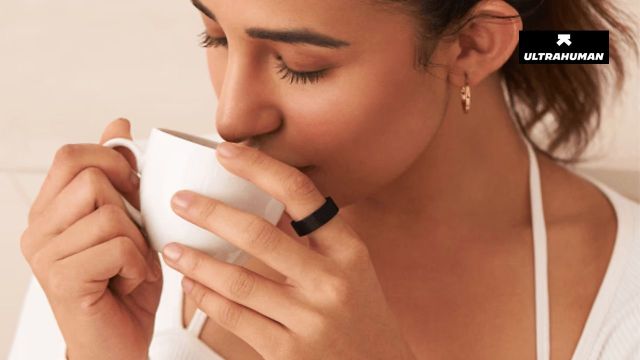
The Ultrahuman Ring AIR tracks these changes while you sleep and compares them with your personal baseline. Looking at the difference from that baseline can provide useful context around recovery, sleep, illness and the menstrual cycle.
It is less about a single temperature reading and more about noticing when your usual pattern starts to look different.
What the Ring is actually measuring
The Ring AIR monitors skin temperature, rather than core body temperature. It tracks the fluctuations that occur at the finger during the night and builds a picture of what is normal for you.
Skin temperature naturally changes as part of the circadian rhythm. It rises and falls over the course of the night, and those changes can be influenced by several things, including recovery, stress, illness, the environment and hormonal changes.
That personal baseline is important. A temperature that is normal for one person may represent a meaningful change for another, which is why looking at deviations from your own usual pattern can be more useful than focusing on a universal number.
Temperature is part of the recovery picture
The Ring AIR uses temperature alongside other signals such as sleep, heart rate and HRV when calculating the Ultrahuman Dynamic Recovery Score.
A higher-than-usual nighttime skin temperature can sometimes appear when the body is dealing with stress or has not fully recovered. If the change continues across several nights, it can be worth looking at what else was happening during that period, including training load, sleep quality and HRV.
The context matters. A warmer night does not automatically mean that something is wrong.
If temperature is trending upward while recovery is falling and HRV is also lower than usual, it may be a good time to ease back on training, give yourself more time to sleep and pay attention to how you are feeling.
Your sleep has a temperature pattern, too
Skin temperature also follows the body’s circadian rhythm and plays a role in the transition into sleep.
During the night, the Ring AIR tracks these changes and can highlight patterns that look different from your usual overnight rhythm. Large or inconsistent fluctuations may sometimes coincide with disrupted sleep, an irregular schedule or changes in the surrounding environment.
Your bedroom temperature, light exposure and bedtime habits can all influence how comfortable you feel at night.
If your temperature pattern looks unusually erratic, keeping your sleep and wake times consistent is one place to start. A cooler sleeping environment may also help, particularly when your body is running warmer than usual.
A change in temperature can sometimes be an early clue
One of the more useful things about overnight temperature tracking is that changes can show up before you consciously notice that you feel unwell.
A sustained rise above your normal baseline may occur when the body is responding to an illness or immune activity. It can also happen for completely different reasons, including changes in training, the menstrual cycle or the environment.
That is why temperature is most useful when read alongside other signals. If a noticeable rise comes with poorer sleep, reduced HRV, lower recovery or unusual fatigue, it may be a reason to take things a little easier and pay attention to how you feel.
The Ring’s data can provide an early indication that something has changed, but it should not be treated as a diagnosis or as a substitute for medical advice.
The menstrual cycle leaves a temperature signature
For people who track their menstrual cycle, overnight skin temperature can provide another way to see hormonal changes over time.
After ovulation, progesterone rises and is associated with an increase in skin temperature. The Ring AIR can use these patterns, alongside other biomarkers such as HRV and resting heart rate, to identify changes associated with different phases of the cycle.
The Cycle & Ovulation PowerPlug uses real-time biomarker data to estimate fertile days and identify the likely day of ovulation.
Temperature can also help make sense of the broader cycle pattern. Around the beginning of menstruation, hormonal levels fall and skin temperature and resting heart rate can decrease. Around ovulation, the biomarkers begin to shift, while the post-ovulation luteal phase is generally associated with a higher skin temperature.
The change is often subtle, which is precisely why a wearable that tracks it consistently can be useful for seeing the pattern over time.
Temperature is most useful when you look for patterns
A single unusual reading rarely tells you very much. There are simply too many things that can influence skin temperature on any given night.
A series of changes is more interesting.
If your temperature remains elevated for several nights, look at what is happening with your sleep, HRV and recovery. If it changes around the same point in your menstrual cycle each month, that recurring pattern may tell you more than an isolated measurement. If your overnight temperature and sleep quality change after a shift in your routine, that is another pattern worth watching.
This is where a continuous wearable can be useful. You do not have to remember to take a measurement at a particular time because the Ring is collecting the signal while you sleep.
What to do with the information
The value of skin-temperature tracking ultimately comes from putting the number into context.
A warmer night after hard training might be a reason to give recovery more attention. A recurring temperature pattern around ovulation can add another layer to cycle tracking. A sustained deviation accompanied by poor sleep and fatigue may be a sign to slow down and see how your body responds.
The Ring AIR does not turn skin temperature into a definitive answer about your health. What it provides is a continuous view of a subtle physiological signal and, more importantly, a way to see how that signal behaves relative to your own baseline.
Over time, those small changes can become much easier to notice — and much more useful to interpret.
Also Read: Portable Label Makers for Kitchens, Workspaces and Kids’ Supplies from Amazon