
Bite into a mirchi pakoda for the first time and you brace for pain. It’s a whole green chilli, deep-fried, stuffed with masala — every instinct says this is going to hurt. Then it doesn’t. Rajasthan and Andhra figured out decades ago that the biggest chillies are often the mildest, and once the seeds and membrane get scooped out and replaced with spiced potato filling, what’s left is more warmth than fire. It’s the pakoda equivalent of a jump scare that turns into a hug. First-timers never believe this until they’ve tried it, and even then half of them still flinch before the first bite.

Why Rain Specifically Triggers This Craving
There’s an actual reason pakoda cravings hit the exact moment the first monsoon drop lands, and it’s not just nostalgia. Humidity does something to appetite — heavy, greasy, hot food suddenly reads as comforting instead of excessive the second the temperature drops and the air turns thick. Add the smell of wet earth (petrichor, if you want the fancy word for it) and you’ve basically built a Pavlovian trigger into the Indian calendar. Chai and pakoda isn’t a coincidence. It’s a seasonal reflex.
Aloo Bhajiya Is the One Everyone Learned to Love First
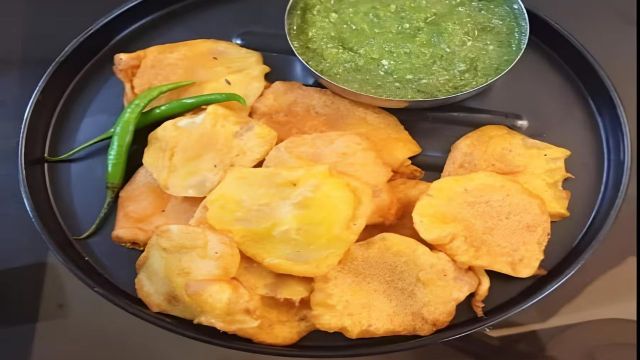
Sliced potato, dipped in besan batter spiked with chilli and turmeric, fried till the edges go dark gold — this is the gateway pakoda, the one sold in paper cones on Gujarat and Rajasthan roadsides with a dusting of chaat masala on top. Crunchy shell, soft interior, nothing complicated about it. Pair it with masala chai and you’ve got the single most reliable combination in Indian street food, full stop. No debate needed.
Paneer Pakodas Are Where Things Get Indulgent
This is the upgrade version — soft paneer cubes wrapped in a thick ginger-garlic-chilli batter, fried until the outside turns crisp and the inside stays creamy enough to practically melt. Some vendors go a step further and stuff green chutney between the paneer and the batter before frying, which sounds like overkill until you taste the extra hit of tang cutting through the richness. Mint chutney on the side isn’t optional here. It’s load-bearing.
Spinach and Mixed Veg: The Ones That Pretend to Be Virtuous
Whole spinach leaves, dipped and fried whole, keep their shape and turn almost lacy at the edges — light, crisp, the closest thing to a “healthy” pakoda that still counts as fried food. Mixed vegetable pakodas take the opposite approach: onion, carrot, cabbage, potato, chilli, all thrown into one batter so no two bites taste quite the same. Neither one is actually health food. Let’s not kid ourselves. But they’re the ones you can serve at a gathering without someone side-eyeing the plate.
Bread Pakoda Is Delhi Refusing to Let a Sandwich Be Boring
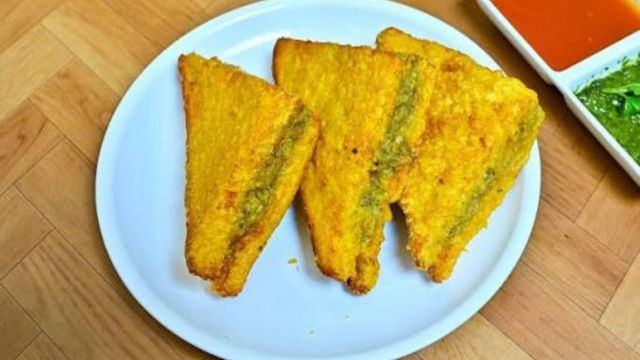
Take a regular sandwich — spicy mashed potato between two slices of bread — and instead of grilling it, dunk the whole thing in batter and deep-fry it. That’s bread pakoda, a distinctly Delhi street invention that shouldn’t work as well as it does. It’s heavier than every other pakoda on this list, verging on a full meal rather than a snack, which is probably why it dominates breakfast carts near office areas as much as evening stalls. Corn pakodas sit at the other end — sweet kernels, light batter, the pakoda you order when you want the format without the heaviness.
The Constant Across All of Them
Strip away the filling and every pakoda runs on the same idea: gram flour batter, hot oil, and just enough spice to keep things interesting. What changes is mood. Alone with a book on a rainy afternoon, aloo bhajiya. Friends over unexpectedly, mixed vegetable, shared straight off one plate. Missing home, paneer pakoda, because someone’s mother probably made it exactly this way once. Same basic technique, completely different emotional job each time — not many snacks pull that off.
Skipping the Frying Pan Entirely
Doesn’t need to rain to justify this one. Zomato has restaurants and cafés serving fresh pakodas year-round — onion, paneer, mirchi, mixed vegetable, whatever the craving happens to be — no oil splatter on your kitchen counter required.
Also Read: Why Every Indian Menu Still Starts With Soup