
Sleep tracking has usually focused on the basics, how long you slept, how often you woke up, whether you hit deep sleep. Useful, but still surface-level.
What it doesn’t really answer is a more important question: what did that sleep actually do for your brain?
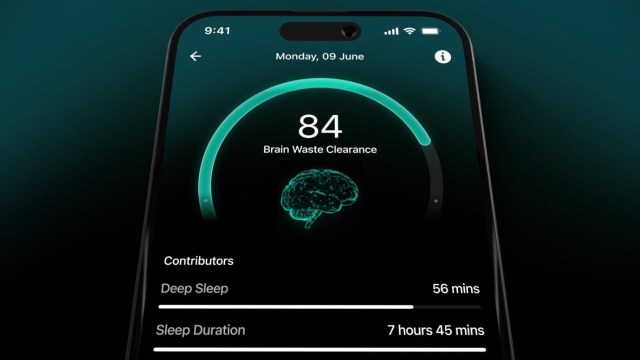
Ultrahuman is trying to go a step deeper with a new metric called Brain Waste Clearance on the Ring AIR. Instead of just measuring sleep quality, it attempts to estimate how effectively your brain is recovering overnight, specifically, how well it’s clearing out waste.
What your brain is doing while you sleep
While you’re asleep, your brain isn’t just resting. It’s actively cleaning itself.
Throughout the day, the brain builds up metabolic waste, including proteins like amyloid beta and tau. Over time, if these aren’t cleared efficiently, they can interfere with how neurons communicate and are often linked to long-term cognitive decline.
This cleanup process happens through what’s known as the glymphatic system, and it’s most active during deep sleep.
So in simple terms, better sleep doesn’t just make you feel rested. It gives your brain the time and conditions it needs to reset.
Turning a complex process into something measurable
The challenge is that glymphatic activity isn’t something a wearable can directly measure.
So instead, Ultrahuman models it.
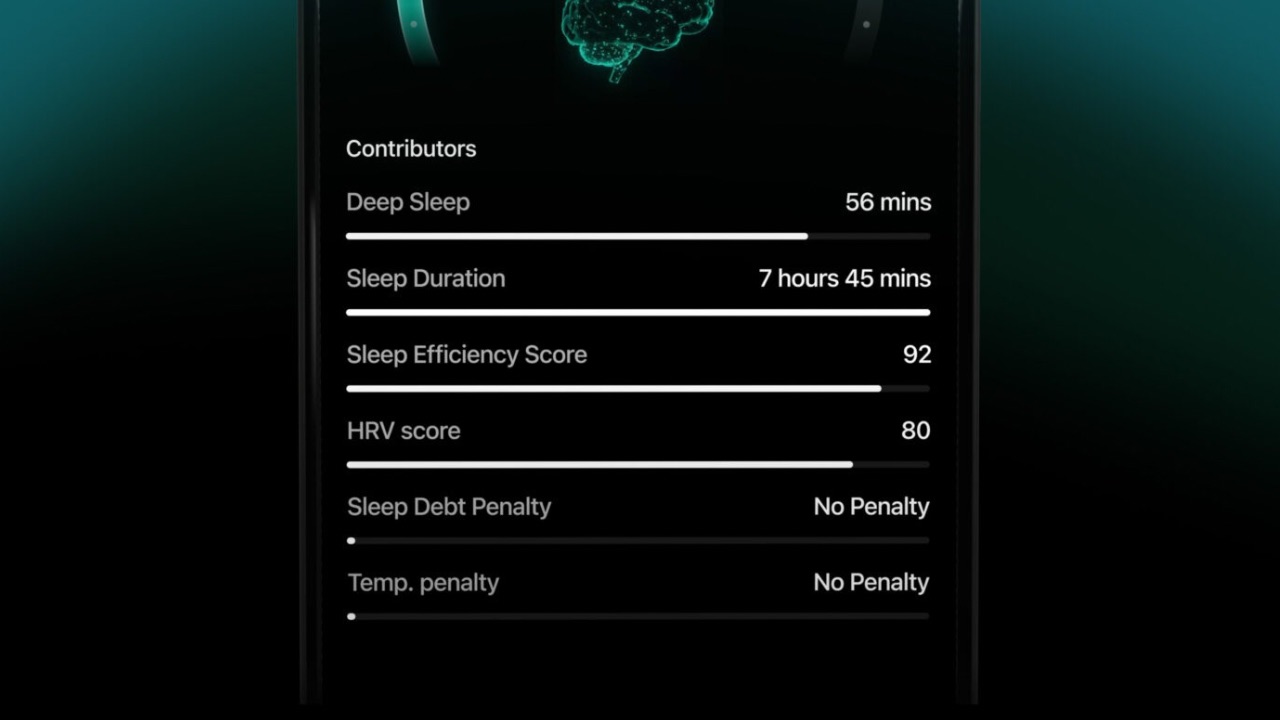
Brain Waste Clearance is calculated using a mix of signals the ring already tracks, things like deep sleep quality, total sleep time, heart rate variability, skin temperature, and overall sleep consistency. These are all factors known to influence how active that overnight cleanup process is likely to be.
The result is a score between 0 and 100.
A higher score suggests your body had the right conditions for effective brain recovery. A lower score points to disrupted sleep, stress, or other factors that may have reduced that efficiency.
It’s not measuring the process directly, but it gives a reasonably grounded estimate of how things are trending.
Also Read: How Ultrahuman Is Changing Preventive Healthcare Through Smart Wearables
Why this actually matters day to day
This isn’t just about long-term brain health, though that’s part of it.
It also connects to how you feel the next day.
If your brain hasn’t had enough time or the right conditions to “clear out,” it can show up as brain fog, lower focus, or that general sense of not feeling fully switched on. Over time, patterns like poor sleep or high stress can keep that recovery consistently suboptimal.
By turning this into a visible metric, the idea is to make something invisible a bit more actionable.
Seeing patterns instead of isolated nights
One useful aspect here is that Ultrahuman doesn’t just show you a single number and leave it at that.
You can dig into what influenced your score, whether it was lower deep sleep, elevated stress, or irregular sleep timing. There’s also a longer trend view, so you can see how your brain recovery has been evolving over time.
That matters because one bad night isn’t the issue. Consistent patterns are.
Over a couple of weeks, it becomes easier to connect the dots between your habits and how your brain is responding.
A different way to think about sleep tracking
What Ultrahuman is doing with Brain Waste Clearance is shifting the focus slightly.
Instead of asking, “Did you sleep enough?”, it’s asking, “Was your sleep actually restorative for your brain?”
It’s still an estimate, not a medical metric, but it adds context that typical sleep scores often miss.
For users already tracking sleep and recovery, this becomes another layer, one that ties sleep more directly to cognitive function, rather than just rest.
And in that sense, it’s less about adding another number, and more about making the numbers you already see a bit more meaningful.